I was walking through New York last week when I passed a corner store with roses going limp in their buckets outside. Petals browning at the edges, heads drooping. And I remembered a story my mom told me.
My Mom’s Story
My mom would fill her home with plants if she could. She genuinely loves them. But she’s convinced she doesn’t have a green thumb.
“When I was 12, I had a garden at home,” she told me. “But my grandmother did the planting. She had a way with plants. Everything she planted grew beautifully. I would bring home little rose cuttings from school, and she would plant them, and they grew gorgeous. All I did was water them so the roses would come out, and then I’d take the little plants back to school.”
Years later, my mom planted something on her own. It was green and pretty when she put it in the pot. Now it’s dry, brown, and brittle.
“Look how they dry out on me,” she said. “I want to replace it, and I’m stubborn about it. I’m going to put another plant in there.”
Stubborn. I liked that word.
Because that urge to try again might matter more than any supposed talent.
The Green Thumb Myth
My mom believes a green thumb is something you’re born with. That her grandmother had it and she doesn’t. But let’s look at the full story. Her grandmother didn’t plant a cutting once in a while. She planted every day, for years. She knew how much water, how much shade, when to prune.
That is not a gift. That is practice.
At 12, my mom did the easy part: watering and carrying the roses back to school. Her grandmother did the hard part. Decades later, my mom is attempting the hard part without ever getting to learn it step by step.
A green thumb is not inherited. It is learned.
What Happened to My Mom’s Plant
The plant looks like a schefflera. The brown, brittle leaves point to one likely cause: it went too long without water.
The important idea stands: a plant can fail not because someone has “bad hands,” but because they’re still learning what that plant needs. And a schefflera isn’t the best choice for someone starting out who tends to forget watering.
The Three Rules for People Who “Kill Plants”
If you believe you don’t have a green thumb, start with these three ideas:
1. Start with plants that forgive. Look for ones that tolerate neglect, low light, or irregular watering.
2. Water with attention, not on routine. Before you water, check the soil. Stick your finger in: if it’s damp a couple of inches down, it doesn’t need water yet.
3. Put the plant where there is light. Even an “easy” plant needs reasonable conditions. Near a window with good light beats a dark corner every time.
The Plants That Forgive
These are the ones that have worked at home:
Pothos. The classic. Tolerates low light and forgotten waterings, and roots easily in water.
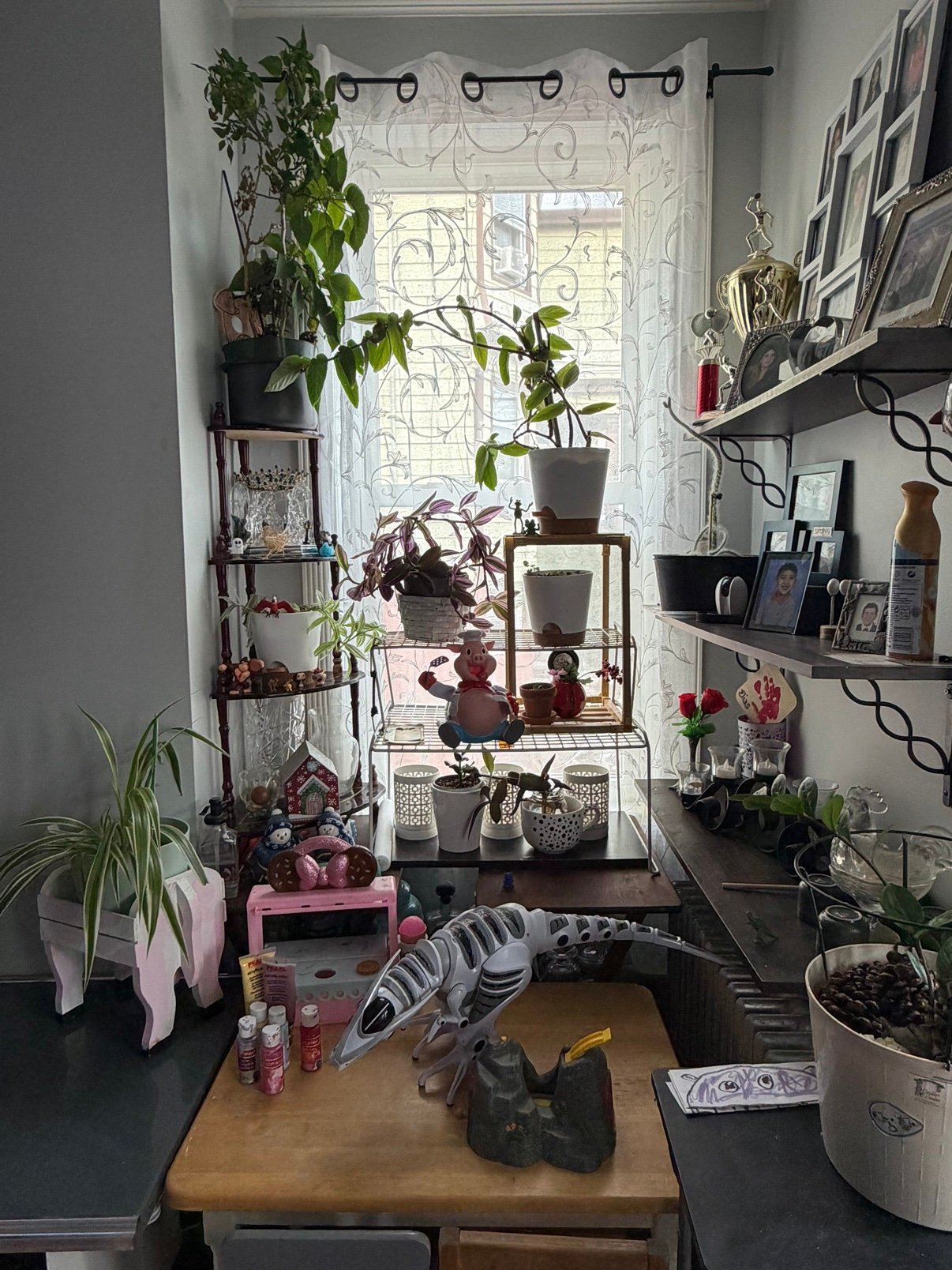
Spider plant. The one with the striped leaves that trails down. It makes baby plants on its own, and it tells you when it’s thirsty: the leaves go limp, then perk back up after watering.
Tradescantia. The one with purple and silver leaves. Grows fast and propagates from cuttings.
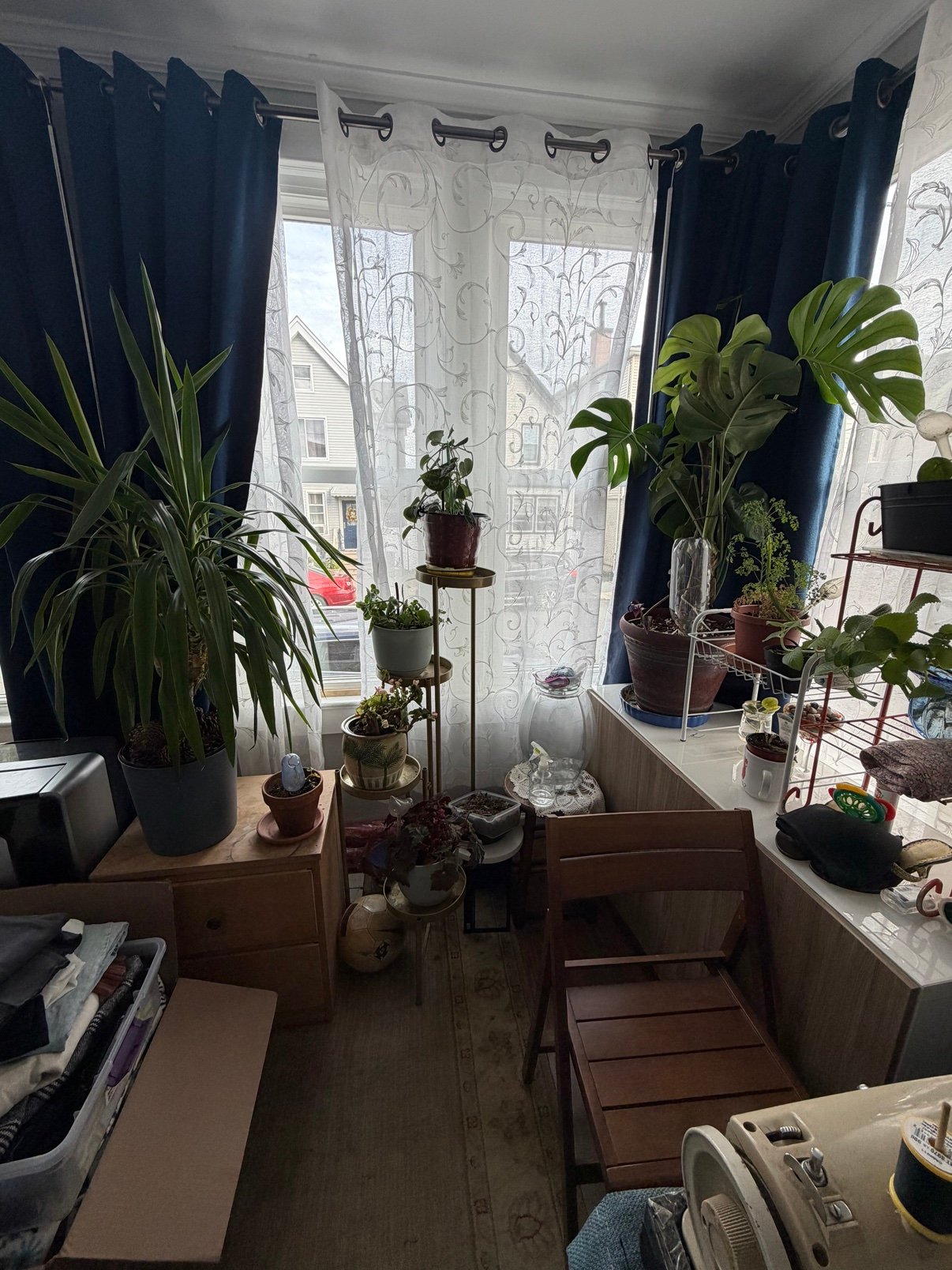
Monstera. The one with the big split leaves. It wants more light than the rest, but it does well near a window. It’s the same idea behind my three-level shelf garden: the right plant in the right spot.
Try Again, Like My Mom
My mom is stubborn. She wants to put another plant in that pot.
And I think she’s right.
A green thumb is not some gift from grandma that got lost along the way. It’s what happens when someone who wants to try starts with the right plant, puts it in the right spot, and learns to look before acting. You don’t need to know everything to start. You don’t need a yard either. One Manhattan balcony full of plants is proof enough. You can start with a single plant.
Start with a pothos. And when it survives, tell me about it.
Your first plant doesn’t have to be perfect. It just has to give you the chance to learn.